work in progress (06/01/19)
There's some useful professional/academic written analysis on-line if you dig around using the correct search prompts looking at and explaining the action of bowling, this is my version of it taking it several steps further.
Too many of the video's on-line focus on the hand and the variations, they're fine if you can bowl your leg-break perfect, but first and foremost you need to be able to do the very basics e.g. bowl a good leg-break. Part of this process includes establishing a consistent and repeatable run-up and it's this part of the process I'm adding to the standard phases 1 through to 6.
(a).
The Plan This advice comes from Warne and Macgill. At the top of your run, you need to
have a plan Warne says before you've even been given the nod to bowl you should have already been looking at the batsmen trying to figure out where their weaknesses are... Do they move their feet, have they got a weak side that they struggle to hit the ball through, is there a gaping great gap between bat and pads, do the tend to play straight or with a cross bat action; do they seem to struggle with figuring out the length of the ball? When you're learning these are pretty tricky things to figure out, but try as much as you can to learn about batting and ways that batsman get out, think about your own batting against spin - in what areas do you struggle.
Warne also suggests that you start your first over bowling different lines with your leg-break and bowling from different positions on the crease e.g. close to the stumps, midway between the stumps and the return crease and close to the return crease. If you have observed that the batsman is weak on the leg-side try a few balls in from the leg-side too, but re-arrange your field in accordance.
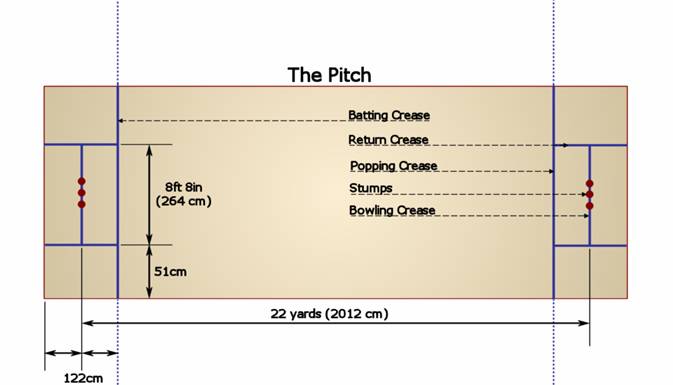
The important thing though is to have some kind of a plan and fundamental to that is when you're fielding watch the batsman try and figure out where they are weak, talk to your captain too, normally the captain is more knowledgeable on these things and will have ideas you may not have thought about.
(b).
Start point In relation to the 'Consistent and repeatable action' which is essential, it's important that your stock ball is consistent and repeatable and part of this process is your run-up, this too has to be exactly the same each time for the most part (95% or more). The only time you might change it would be as some form of tactical approach e.g. your might start further back and bowl off of a point deeper in the crease to furtively change the length. But almost all of the time you start out from the exact same point. Some people score dirty great lines in the grass with their spikes others have run-up markers that you tend to forget about and leave...

For what they are these things are expensive so I use bottle tops off of Lucozade bottles either red or orange and press them into the ground with my heel. They do exactly the same thing and are free. In fact they tend to stay there and I use them the next time the strip is used in a game. When I arrive at a game and find out what strip we're playing on, I usually go out and measure my run-up before the game starts and put a marker in at both ends ready for when I bowl.
Once you've got your mark you can set off from the same length every time and this should negate any chance of your bowling a no-ball.
(c).
Relax; Stuart MacGill and Warne both make the point that you need to relax, bowling with any tension will affect your bowling. Warne makes some good point about being relaxed all the way through to the grip, the grip should be loose. MacGill in his Wrist Spin video explains the grip should be loose and relaxed and advocates shaking your arm and wrist to ensure that you have a floppy flexible wrist. Being relaxed is a massive part of spin bowling and one of the most demanding aspects of this is to remain relaxed even though you may have been hit for 4 or 6 or worse still a series of 4's and 6's. Similarly when you're learning and bowl wides, short balls or no-balls, being able to brush that off and not worry and to back to your game plan is one of the key parts of being a Wrist Spin Bowler. I can tell you now, it is not easy, you tend to feel like you're letting the side down and you're losing the team the game. It's in these situations where you need the support of your captain and to be able to dismiss the situation and get on with bowling your stock ball in a relaxed state. It comes with time and experience.
(d).
Delivery choice; You've got your plan, you need to make a choice about where you're going to put the ball. Don't run in and just bowl, have an intention based on your observations of the batsman. Again if you're learning keep it simple, bowl at the off-stump so that the player has to play the ball, if the ball spins and goes away from the bat, you've executed a good ball if you land it on a good length for that batsman and his style of playing. The important thing is not to just bowl, try and get it in the area you feel is going to be effective.
(e).
Setting off; MacGill says and I totally agree -
always set off of on the same foot. The only adjustment you might make at this point is the width from which you start off, start from the same length, but maybe stand a step wider or closer of your basic run-up. Warne would say that doing this gives the batsman something to think about, try and get the batsman thinking about what you're doing rather than what he's doing. Then MacGill says to exhale and then set off.
(f).
Phase 1. At this point we're into the phases of the bowling action -
PDS Pre-delivery stride.
I feel that the run-up is one of the more neglected aspects of spin-bowling. You need to establish as soon as you can a way in which you can execute your run-up, otherwise you'll have to return to this at some point and correct it and establish it later. A lot of people will advocate spinning the ball hard first and complete neglect the run-up, but I feel they go hand in hand. Spinning the ball hard is something you should be doing constantly at every moment, you should have balls around your house which you pick up and give a flick. But when you're out and bowling the full 22 yards in practice, you must have an established run-up, one that is consistent and repeatable. Otherwise all of the following information is virtually irrelevant. Look
here for some guidance with regards to the Run-Up.
Don't just look at Warne, look at Kumble, MacGill, Shah, Afridi, Tambe, Rashid, Benaud, Grimmett and Ahmed for examples, look at the different ways that they run-up, which one looks like the one that might suit you, do you feel like a bowler that approaches the crease slowly off of short run-up or do you feel like someone that will run-in with some speed and aggression?
While this is still under construction you might be interested in the following...
My other active blogs include…
This is an example of some of the bowling vids on my Youtube
channel
FFC Front foot contact
Bibliography http://www.quintic.com/education/case_studies/Cricket%203.htm


